New Jersey restores Monmouth Park purse subsidy to $10 million
New Jersey’s restored $10 million subsidy kept Monmouth Park in the strong statutory tier, protecting purse levels, field size and the Haskell-led summer meet.
Monmouth Park landed the biggest number it could ask for: New Jersey restored the track’s annual purse subsidy to $10 million, reversing an earlier budget plan that had cut the figure to $5 million. Gov. Mikie Sherrill signed the state budget late Tuesday night, locking in funding for 2027 racing operations and giving the Oceanport oval a steadier financial base heading into the summer.
That matters far beyond a line item. Under P.L.2019, c.36, New Jersey sets aside $20 million a year for horse racing purse subsidies, split evenly between thoroughbreds and standardbreds, and 100% of the thoroughbred share goes to Monmouth Park overnight purses. In practical terms, the restored money helps protect purse levels, and purse levels drive field size. Bigger purses usually mean more horses, more competitive races and a better betting product, which is exactly what keeps Monmouth relevant in the Mid-Atlantic circuit.
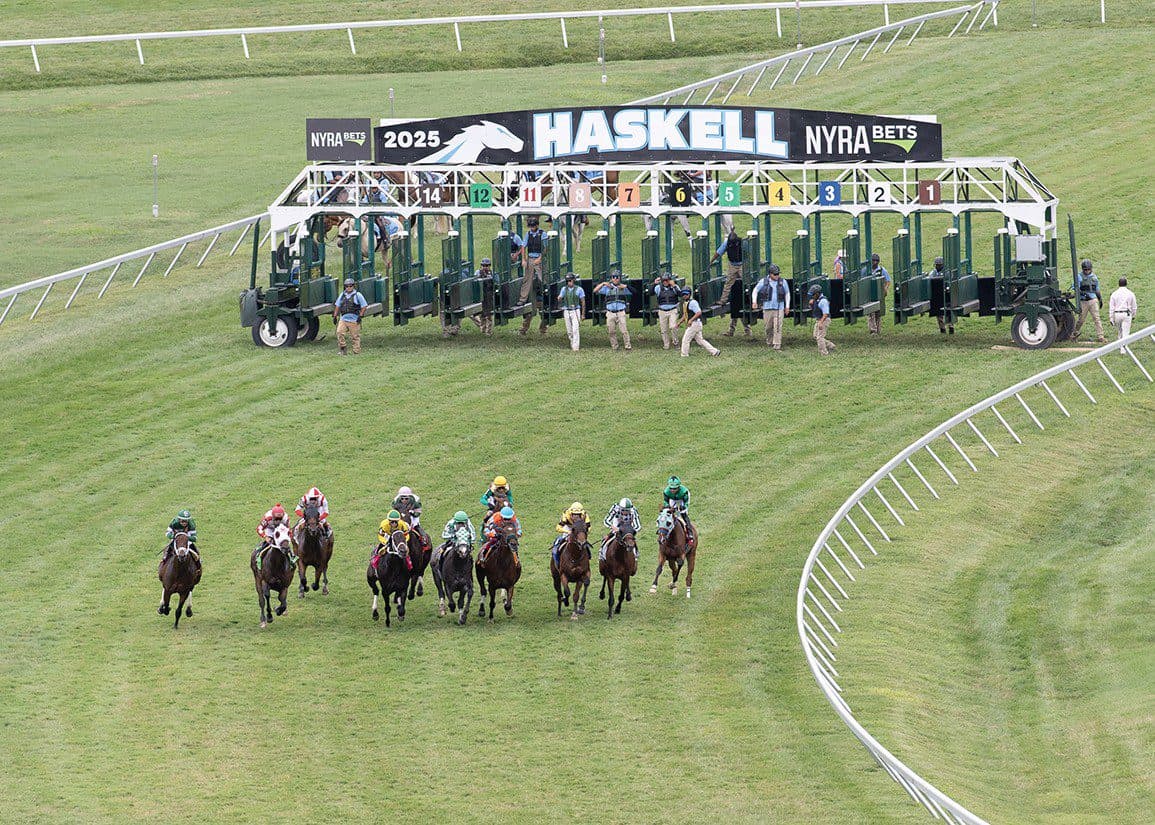
The timing is important because Monmouth is already deep into a 50-day season that runs through Sept. 13, 2026, with the $1 million NYRA Bets Haskell Stakes set for July 18. Monmouth says Haskell Day also includes five additional stakes, among them the Grade 2 United Nations, making the meet’s signature afternoon one of the most important cards on the summer calendar. The restored subsidy gives horsemen more reason to ship in, stable up and aim for those races instead of looking elsewhere for richer or safer spots.
The fight over the subsidy had been serious enough to drag race dates into the conversation. In January, the Thoroughbred Breeders’ Association of New Jersey said cutting Monmouth to 25 race dates would destroy the state’s breeding program. An amended bill introduced Feb. 19 would have let thoroughbred dates fall to 40 if the subsidy came in below what was required but stayed above $5 million, and to 25 only if no purse subsidy was appropriated at all. The original concern was not hypothetical, either. Monmouth normally runs 50 days, not counting nine all-turf cards at Meadowlands Racetrack.
Dennis Drazin thanked state Sens. Vin Gopal and Paul Sarlo for their work, then put the issue in the blunt terms horsemen understood best. “As anyone in business knows, uncertainty is the enemy,” he said. That uncertainty had threatened to hang over the meet, the breeding program and the calendar around it. The restored $10 million keeps Monmouth in the stronger part of the statutory range and leaves the track with a clearer path for the races that matter most.
Monmouth-related sources say horse racing in New Jersey generates more than $4 billion in statewide economic impact, nearly 4,000 jobs and more than $75 million in tax revenue, while the breeders association has cited a $780 million thoroughbred industry impact statewide. The new budget does not solve every problem in the sport, but it removes the kind of financial pressure that can quietly shrink a meet before the first horse ever breaks from the gate.
This article was produced by Prism’s automated news system from verified source data, official records, and press releases, then run through automated quality and moderation checks before publishing. The system is built and supervised by the people who set the standards it runs under. Read our full AI policy.
Did this article answer your question?