African Americans shaped horse racing from its earliest days in the U.S.
Black horsemen built U.S. racing from the start, then got written out of its memory. The Derby’s early champions, from Oliver Lewis to James Winkfield, prove it.
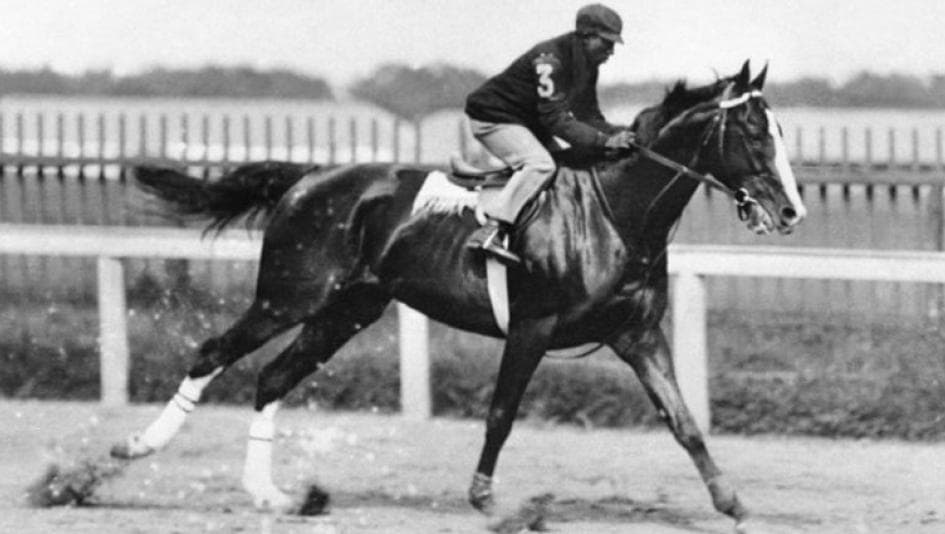
Black horsemen were central to horse racing in the United States from the sport’s beginnings, especially in the early 19th century. In the South, where racing became a pastime for wealthy landowners, enslaved people routinely cared for, trained, and rode the horses that made the sport work. That early labor helped build the industry’s first stars, even as later generations of racing history pushed them to the margins.
The sport’s first workforce was also its first talent pool
Horse racing did not emerge as a polished, all-white tradition. It grew out of stables, barns, and plantation labor, where Black horsemen handled the daily work of keeping horses fit and race-ready. Encyclopaedia Britannica’s account of African Americans and horse racing makes the point plainly: from the start of the sport in the U.S., Black horsemen made significant contributions.
That matters because the modern image of racing often skips straight to glamour, roses, and big purses. The reality is more rooted in labor, skill, and exploitation, with Black riders and trainers embedded in the sport long before the industry was willing to credit them publicly. The historical record shows not a side story, but a foundation.
The Kentucky Derby’s first chapter already had Black riders in it
The Kentucky Derby began in 1875, and its first winner, Aristides, was ridden by Oliver Lewis, a Black jockey. That fact alone undercuts the tidy version of racing history that treats African Americans as later additions to a sport already fully formed. Lewis was there at the beginning of the Derby itself, not as an exception from outside the system, but as part of the system that created it.
Isaac Burns Murphy took that early presence and turned it into a benchmark that still stands out in the record books. Born on April 16, 1861, in Fayette County, Kentucky, Murphy began his career as a horse-riding apprentice and was winning at a remarkable pace by the time he was 18, with 22 wins in 35 mounts. He went on to win the Kentucky Derby in 1884, 1890, and 1891, becoming the race’s first three-time winner and the first jockey to win back-to-back Derbies.
Isaac Burns Murphy set a standard the sport still measures
The Kentucky Horse Park describes Murphy as one of the greatest American jockeys of all time, and the numbers behind his career explain why that reputation endures. By his own account, he won 44 percent of his races, while chart books from the era verify a 34.5 percent win rate. Even the lower figure is extraordinary in a sport defined by thin margins, short careers, and fierce competition.
Murphy’s story also captures how dominant Black riders once were in racing. The Kentucky Horse Park notes that he rose in a field dominated by African American jockeys at the time, a detail that makes his success look less like an outlier and more like the peak of a broader Black presence. That context is crucial, because it shows the sport’s early excellence was not colorblind; it was built in a world where Black horsemen were among the most skilled people on the track.

Willie Simms and James Winkfield extended the line
Willie Simms carries another important first: he was the first Black jockey to win the Kentucky Derby on a horse trained by a Black trainer. That detail matters because it shows Black influence in racing was not limited to riding talent alone. It reached into training, horse management, and the full chain of expertise needed to win at the highest level.
James Winkfield carried the legacy into the 20th century, winning the Kentucky Derby in 1901 and 1902. Britannica identifies him as the last African American to win the Derby as a jockey, which marks both an achievement and a closing door. His back-to-back victories show that Black excellence did not vanish because the talent disappeared; it was crowded out as segregation and exclusion reshaped who could move through the sport with opportunity.
How the history was erased from the mainstream story
The decline in Black visibility was not accidental. As segregation hardened and the industry’s structures shifted, the once-dominant presence of African American jockeys and horsemen was diminished in the public memory of the sport. Racing’s official traditions kept the spectacle while losing the people who helped create it, and that gap still shapes how the game tells its own origin story.
That is why many casual fans can name the Kentucky Derby but not Oliver Lewis, Isaac Burns Murphy, Willie Simms, or James Winkfield. The sport preserved the race, the trophy, and the pageantry, but not always the men whose skill made those early years matter. When Black contributions are left out of the standard narrative, the history of racing becomes flatter, older, and less accurate than the record itself.
Why Marlon St. Julien still matters to this history
Marlon St. Julien’s 2000 Derby ride briefly renewed public attention to Black jockey representation after decades of near invisibility. His presence in the race did not rewrite the sport’s past, but it forced a reminder that Black riders had always been part of racing’s core story. In a modern industry that talks often about access, tradition, and diversity, that reminder lands with unusual force because the evidence is already in the record.
The deeper lesson is that horse racing’s early success in the United States was built with Black labor, Black skill, and Black wins. Oliver Lewis opened the Derby’s history, Isaac Burns Murphy defined its standard, Willie Simms expanded its possibilities, and James Winkfield carried the line into a new century. The sport’s memory has often failed them, but the facts of its earliest years did not.
This article was produced by Prism’s automated news system from verified source data, official records, and press releases, then run through automated quality and moderation checks before publishing. The system is built and supervised by the people who set the standards it runs under. Read our full AI policy.
Did this article answer your question?