How racehorses learn the starting gate through early training
The first race move is made in the gate. Young Thoroughbreds learn to load, stand, and break cleanly so early position, safety, and pace are decided in seconds.
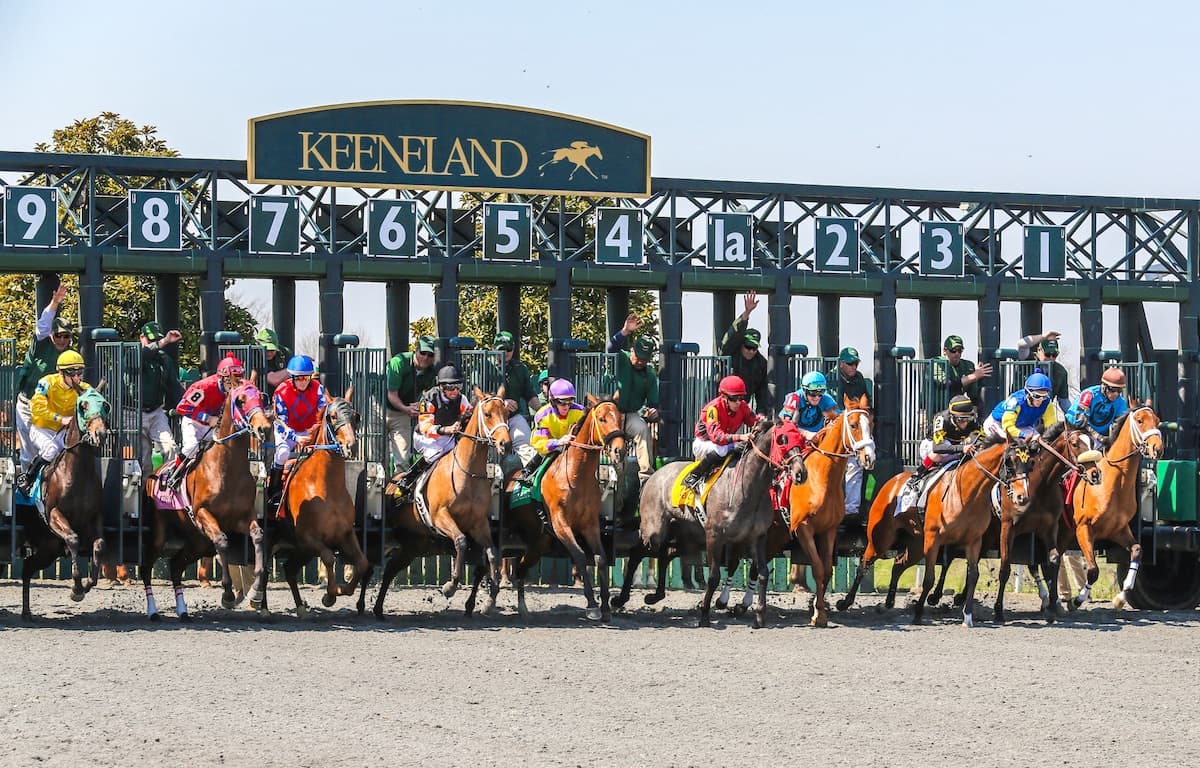
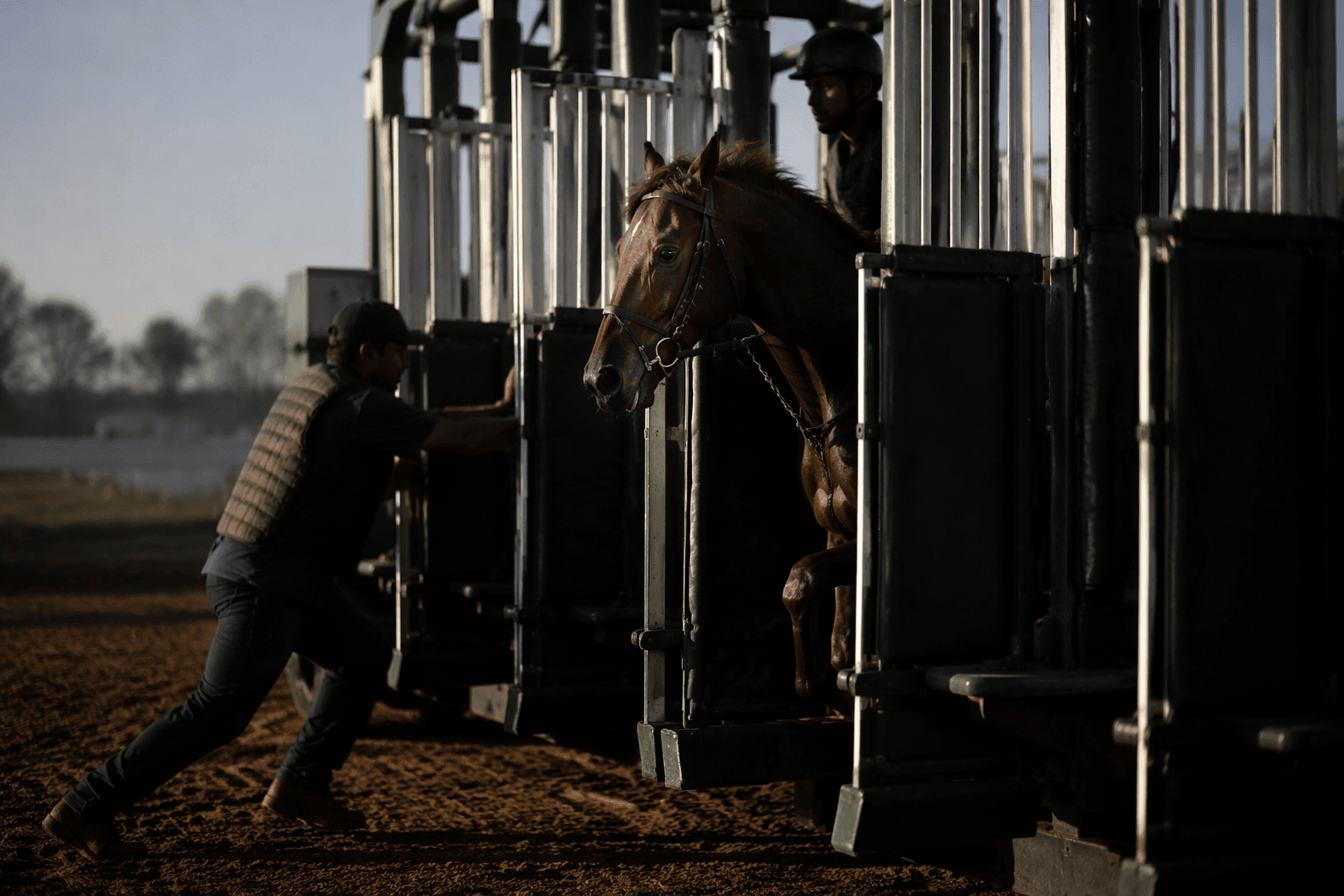
Starting-gate stalls can open in both the front and the back, which sets them apart from a trailer or other enclosed space. A horse that breaks sharply from the gate can save ground, secure position, and dodge traffic before the field has settled into stride. That advantage is not instinctive, and it is not accidental. It is built through repeated schooling, often starting when the horse is still young, so the starting gate becomes a place of routine rather than panic.
The gate is the first test
The starting gate does more than line up a field. It turns a group of individual runners into a simultaneous start, and its design forces a horse to accept a very specific job: walk in calmly, stand still in a confined stall, then explode forward when the doors open.
The horse is not simply being transported. It is being asked to enter a narrow space, accept pressure from the sides, and then leave without hesitation.
How young Thoroughbreds learn to load
Gate education begins early enough that the horse starts to treat the structure as ordinary equipment, not a threat. Trainers teach young Thoroughbreds this skill through repeated schooling. The Retired Racehorse Project includes walking a horse through a small starting gate as part of that early process. Farm staff can use that low-pressure exposure before a horse is asked to jog or gallop, so the gate becomes part of the daily pattern.
In a May 11, 2010, post on The New York Times Rail blog, three “babies,” or 2-year-olds, went to the starting gate for work for trainer Michael Pino after a track renovation break at Fair Hill Training Center in Maryland.
A horse that has been walked through a small gate, loaded repeatedly, and asked to stand quietly is less likely to treat the race-day break as a startling event.
Why a clean break changes the race
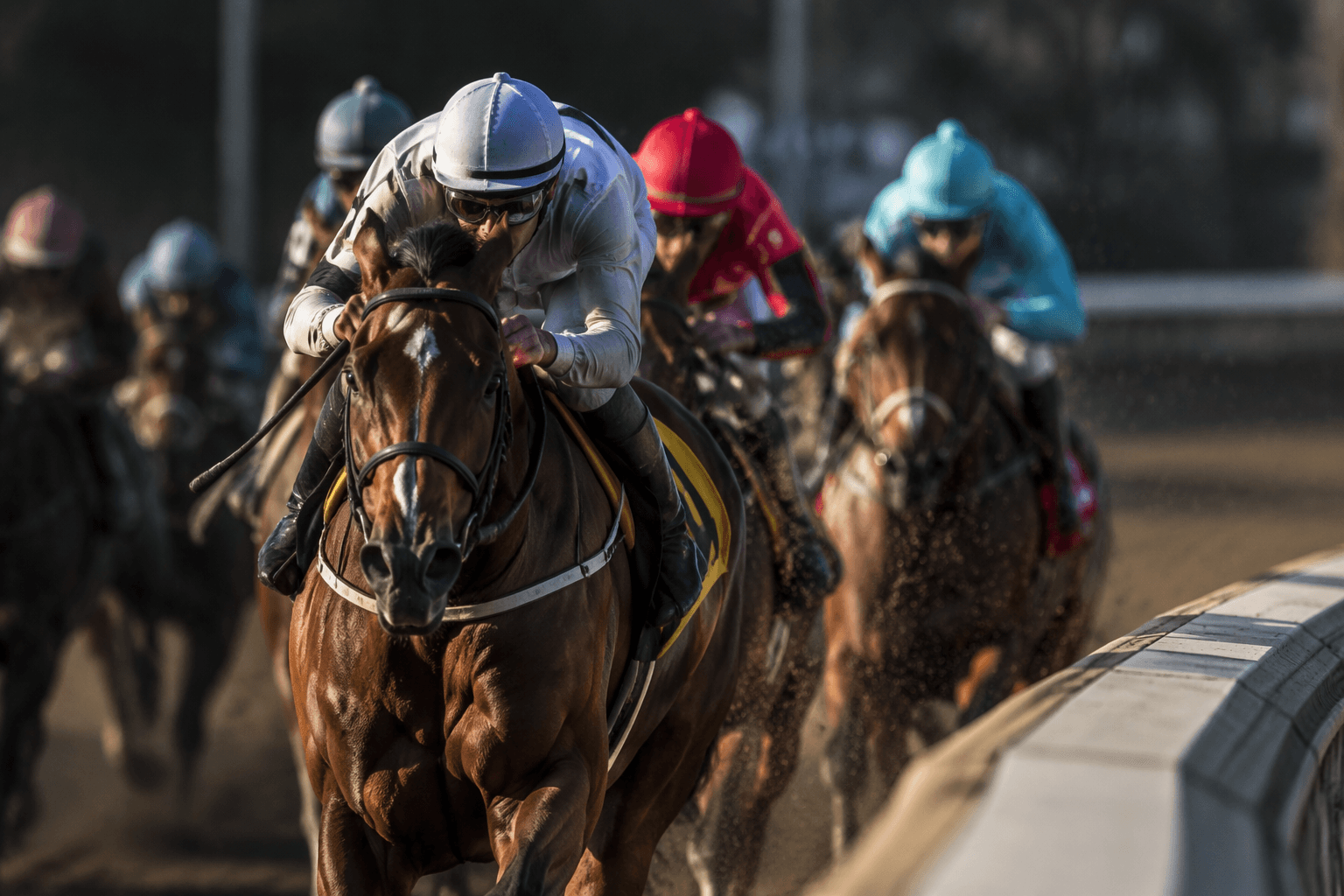
The gate is not just a safety issue; it is a tactical one. A sharp break can help a horse save ground, secure position, or avoid being trapped behind slower rivals, especially in sprints and on tighter tracks. A poor break can put the jockey on the defensive immediately, forcing an early catch-up ride that changes pace, trip, and the final result.
A horse that lingers, tosses its head, or misses the break can compromise a race before the first furlong is over. In practical terms, the break can decide whether a horse is on the lead, stalking in the clear, or fighting traffic from the start.
A 2023 New York Racing Association video featuring Richard Migliore, posted on April 14, 2023, focused on how quickly decisions have to be made in the moments after the break. The jockey’s job is not just to ride the horse that leaves the gate well, but to react instantly when the break is clean, awkward, or somewhere in between.
From informal starts to standardized fairness
The modern starting gate is part of a longer move toward discipline at the start. A simple hand-held red flag once owned by Henry Custance was an early step in that evolution. The National Horseracing Museum article updated on September 18, 2023, places the flag in a phase of bringing order to race starts so every horse has an equal chance of winning.
Custance’s own record gives the history extra weight. He won the Derby in 1860, 1866, and 1874, then started the race in 1885.
The progression from a hand-held flag to modern starting stalls reflects the sport’s effort to standardize the break.
When the gate becomes a problem
Not every horse accepts the gate without resistance. Thoroughbred Racing Commentary uses the term “problem” horses for the issue, and rules vary around the world. Different racing jurisdictions handle loading and difficult behavior in different ways.
A horse that refuses to load, shifts in the stall, or reacts badly to the break can threaten both safety and fairness. Trainers spend so much time on gate schooling because the cost of a bad start is immediate and visible: a stalled horse loses position, a startled horse risks itself and the field, and a race that looked even on paper can be compromised in the first heartbeat.
This article was produced by Prism’s automated news system from verified source data, official records, and press releases, then run through automated quality and moderation checks before publishing. The system is built and supervised by the people who set the standards it runs under. Read our full AI policy.
Did this article answer your question?