Monmouth Park future tied to $200 million mixed-use redevelopment
Monmouth Park’s future now runs through 80 adjacent acres and a roughly $200 million mixed-use plan designed to support racing beyond the summer meet.
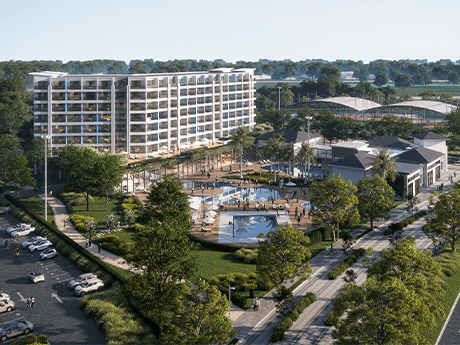
Monmouth Park’s future is no longer just about the horses breaking from the gate on the Jersey Shore. An 85-year lease tied to phased development on about 80 acres next to the racetrack in Oceanport puts a roughly $200 million mixed-use project at the center of the conversation, with racing continuing while the land around it changes. The real question for horse racing is not whether the property will evolve, but how that evolution changes attendance, event-day traffic, purse support, and the long-term case for Monmouth as a serious venue, not just a nostalgic one.
Why the land around the oval matters
Monmouth has been part of the New Jersey racing landscape since 1870, and its marquee day remains the Haskell Stakes. That matters because the track still has a brand powerful enough to draw national attention, but a strong stakes race alone does not guarantee year-round stability in a crowded entertainment market. The surrounding property now becomes part of the racing equation: if development pulls more people onto the site, creates more reasons to linger, and supports new revenue streams, it can help keep the track viable beyond a single summer centerpiece.
That is the context behind the lease and redevelopment plan connected to Morris Bailey, JEMB Realty, and Darby Development, which operates Monmouth Park. In August 2024, multiple reports described the arrangement as a public-private partnership that would allow phased development while racing continues on the property. Oceanport Borough materials posted in May 2024 also showed an updated Monmouth Park development plan, a sign that the project had moved from concept into local review.
What is planned for the 80 acres
The development footprint is substantial. The project has been described as a roughly $200 million mixed-use redevelopment across about 80 acres adjacent to Monmouth Park Racetrack in Oceanport, New Jersey. Reported elements include a 298-unit residential building, a 200-key or 200-room hotel, and a youth sports community center, with some coverage also citing retail, entertainment, and community-space components.
That mix matters because it points to a property designed to function on more than race dates alone. A hotel can capture out-of-town fans, horsemen, and event traffic. Residential and retail components can create a built-in population base and a steadier daily presence, which is exactly the kind of year-round activity a track business needs if it wants to remain relevant while racing itself remains seasonal.
How redevelopment could change the racing product
For fans, the clearest change would be the race-day experience itself. More on-site activity can mean more parking pressure, more congestion, and more planning around how people move into and out of the venue, especially on major stakes days. At the same time, a more developed property can also mean better amenities, more reasons to arrive early, and a stronger event atmosphere around a racing product that already has a national calling card in the Haskell.
For owners and horsemen, the stakes are even more practical. A more stable business model around the track can support purse levels, maintain the quality of the meet, and protect Monmouth’s place on the summer circuit. Monmouth’s 2025 Haskell Stakes carried a $1 million purse, and the track announced a crowd of 41,876 for Journalism’s victory, which shows the race still has real gravity. The question is whether development can help preserve that kind of marquee race viability without relying on it as the only economic engine.
Why the Haskell still anchors the argument
The Haskell remains Monmouth’s spine. It gives the track its biggest stage, its strongest national visibility, and the kind of single-day lift that many racing venues spend years trying to manufacture. But the 41,876 in attendance for the 2025 running also shows the paradox at the center of Monmouth’s future: the track can still draw, yet it needs a broader foundation if it is going to sustain that draw across a full season and through quieter months.
That is why the development discussion is more than real estate. Several later reports framed the new 85-year lease as providing a path forward for the development of the 80 acres while racing remains in place, and some went further by describing the project as a way to secure Monmouth Park’s financial future. In practical terms, that means the success of the redevelopment will be measured not just by buildings delivered, but by whether the racing product remains strong enough to justify the track’s identity as a major summer venue.
What to watch as the project unfolds
The most important indicators will be on the racing side, not just the construction side:
- attendance on Haskell day and across the meet
- traffic flow and parking access on major race days
- whether the hotel and surrounding uses actually feed race-day demand
- purse strength and field quality over time
- the durability of Monmouth’s place in the summer stakes calendar
A phased project can work in racing’s favor if it brings in year-round activity without crowding out the reason the property exists in the first place. Monmouth Park has the history, the stakes brand, and the Jersey Shore setting. The test now is whether the 80 acres around it help turn that legacy into a more durable business for the next generation of races.
This article was produced by Prism’s automated news system from verified source data, official records, and press releases, then run through automated quality and moderation checks before publishing. The system is built and supervised by the people who set the standards it runs under. Read our full AI policy.
Did this article answer your question?