Ancient horse racing roots shaped the sport’s modern racetrack tradition
Modern racetracks still follow an ancient blueprint: fixed venues, elite bloodlines, handicaps, and rulebooks all trace back to Greece, Rome, and early racing clubs.
The modern racetrack is not a break from the past, it is the past with better timing equipment. Horse racing still leans on the same core ideas that drove it in antiquity: a measured course, a crowd gathered in a purpose-built venue, and the fascination with which horse can cover distance fastest. That is why the sport’s oldest features, from the hippodrome to the stud book, still shape what fans see when the gates spring open.
Ancient spectacle built the template
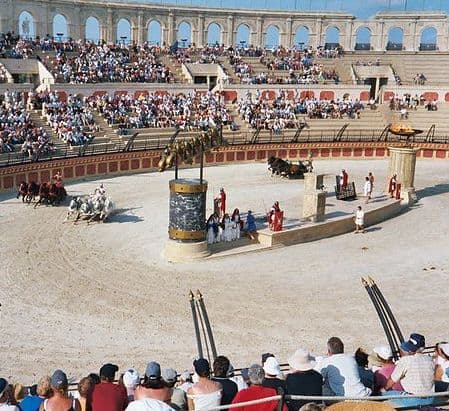
The ancient Greek hippodrome was not a loose field with horses running wherever they wanted. Encyclopaedia Britannica describes it as a long, narrow stadium built for horse racing and especially chariot racing, with one rounded end and one straight end. The Roman equivalent was called a circus, which says plenty about the scale of the event: this was public spectacle with architecture designed around speed, visibility, and crowd control.
That layout still matters because modern racing inherited the idea that the venue itself is part of the competition. A racetrack is not just a strip of dirt or turf, it is a fixed arena where distance, turns, and sightlines shape the race. The hippodrome and the circus established the logic that a race should happen on a defined course, in front of a packed audience, with the result determined in plain view.
Olympia made racing elite, public, and worth recording
The ancient Olympic Games sharpened racing into a prestige event. The Olympic chariot race was introduced in 680 BC, and horse races were also part of the program. The games were held every four years at Olympia in honor of Zeus and lasted for more than a millennium, which tells you how deeply organized competition had already taken root.
KU Leuven’s Ancient Olympics resource adds the part modern fans might not expect: horse races were among the most prestigious events at Olympia, and only very rich owners could afford to keep racing horses and transport them there. In ancient Olympic horse races, the owner was proclaimed victor, not the rider. That detail is a direct ancestor of today’s bloodstock obsession, where the horse’s pedigree, ownership, and stable program can matter as much as the performance on the day.
The ancient recordkeeping matters too. Britannica’s Ancient Olympic Games entry identifies Koroibos of Elis as the first recorded Olympic victor. That reminder is important because racing has always lived not only on the track, but in the record book. The sport depends on naming winners, comparing performances, and preserving who beat whom, when, and under what conditions.
The Thoroughbred changed racing from contest to industry
The modern version of horse racing is built around the Thoroughbred, which Britannica identifies as the defining breed for Flat racing. That is a major shift from antiquity, when the event was about speed and spectacle but not yet a standardized breed economy. Once breeding became central, racing stopped being only a contest of skill and became a system in which lineage, conditioning, and selection were part of the sport itself.
Britannica’s history of horse racing places the modern game inside that larger structure: breeding, training, jockeys, race conditions, tracks, and official rules. Those pieces are what separate contemporary racing from the ancient version. A race today is not just a horse running fast. It is a controlled competition with class levels, standardized distances, and a premium on whether a horse has the pedigree and preparation to stay the trip.
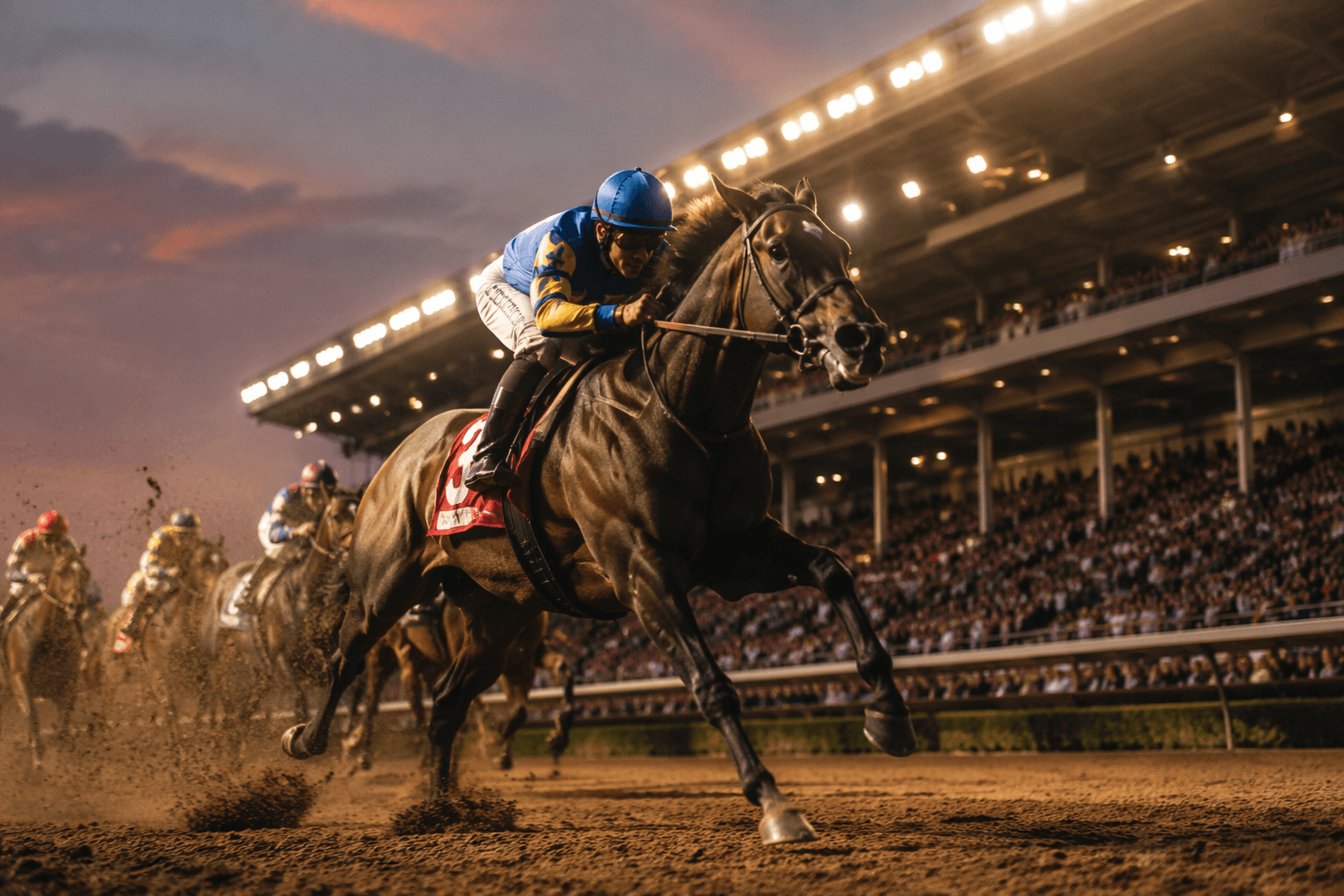
The bloodline side of the sport is not decorative. The sport’s history commonly points to three foundation stallions, the Darley Arabian, the Godolphin Arabian, and the Byerley Turk, as the roots of the modern Thoroughbred bloodline. That legacy explains why breeders still talk about sire lines and family influence with the kind of detail baseball fans reserve for batting splits. In racing, lineage is not background noise. It is part of the handicap.
Rulebooks and race meetings turned racing into a system
The moment horse racing became organized, it needed governance. In the United States, The Jockey Club received a certificate of incorporation from New York on February 9, 1894. The club says its real genesis came two months earlier, when eight patrons of the turf met in New York City, chaired by James R. Keene, to create an association meant to bring order to racing’s growing chaos.
That is the hidden hinge of modern racing. Bloodlines and speed make headlines, but rule-making keeps the sport coherent. The Jockey Club remains a central industry body, publishing an annual Fact Book and maintaining the American Stud Book system. Those functions matter because they give the sport its memory, its standards, and its ability to sort genuine competition from noise.
This is also where race meetings became more than one-off events. Organized meets, official conditions, and club oversight made racing repeatable across seasons and regions. Once a racing calendar exists, the sport can build stakes races, graded events, and distinct classes of competition. That structure is one of racing’s most important inheritances from the past, because it turns isolated contests into a durable competitive circuit.
Handicapping is the old logic that still balances the sport
Handicapping is one of racing’s clearest examples of a historical idea that never went away. The mechanism is simple enough: assign weights to level competition. But the effect is profound, because it keeps races from becoming pure exhibitions of superior bloodstock and allows different horses to meet under conditions that can produce real competition.
That concept fits the sport’s long arc. Ancient racing already revolved around prestige, access, and ownership. Modern racing keeps the same tension, but rules, weights, and class conditions try to make the races worth watching beyond the most obvious favorites. When a handicap is done well, the race becomes a test of judgment as much as raw speed.
- The venue still matters, because fixed courses preserve the track-specific demands first built into the hippodrome.
- The bloodline still matters, because Thoroughbred breeding is the sport’s engine.
- The rulebook still matters, because official conditions decide who belongs in each race.
- The handicap still matters, because it keeps competition from collapsing into inevitability.
Horse racing’s modern racetrack tradition did not appear fully formed. It was assembled from ancient spectacle, elite ownership, selective breeding, and organized governance, then refined into the Thoroughbred game fans know now. That is why the sport still feels bigger than one race card: every finish line carries the shape of the old stadiums, the old prizes, and the old need to record who was best.
This article was produced by Prism’s automated news system from verified source data, official records, and press releases, then run through automated quality and moderation checks before publishing. The system is built and supervised by the people who set the standards it runs under. Read our full AI policy.
Did this article answer your question?