How horse racing handicaps turn ratings into race weights
Handicaps turn a horse’s official rating into pounds on its back, and the sharpest edge is spotting the runner that may still be better than the mark says.
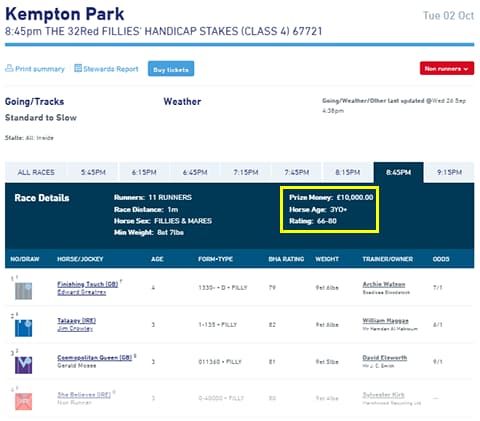
The British Horseracing Authority publishes weekly official ratings based on racecourse performances, then turns those ratings into the weight a horse carries. Higher-rated runners shoulder more burden than lesser-rated rivals. The better horse gives weight away, and the punter’s job is to decide whether the extra pounds are enough to bring the field back together.
How ratings become race weights
The first line to find on a handicap racecard is the official rating, often shortened to a mark. Handicappers use performance figures to assess horses and assign those ratings, so the number is a formal measure built from what the horse has actually done on the track. Once that mark exists, it does two jobs at once: it sets the weight a horse must carry and it helps determine which handicaps the horse is allowed to run in.
That matters especially for unraced or lightly raced horses, where the handicapper cannot lean on a long record. In those cases, the initial mark is estimated from what the horse has shown in competition and from how those efforts compare with established benchmarks. Once the horse has enough runs, the rating is no longer just an opening number, it becomes a moving assessment that rises or falls as new form arrives.
What to read on a handicap racecard
A handicap racecard sets ability against burden. One horse may have the top official rating and therefore be asked to carry the most weight, while another sits lower in the list and gets a lighter load. The key is not simply who is top rated, but whether the horse on the page still looks better than the mark it has been assigned.
Ratings govern entry, shape tactics, and decide whether a horse is running from a position of advantage or under pressure. When a handicapper has raised a horse after a strong run, the racecard tells you the market is asking whether that horse can repeat the effort while carrying a little more.
Where weight-for-age fits in
Handicap weights are only part of the picture. Weight-for-age adds another layer, and it exists for a straightforward reason: younger horses are not as physically mature as older horses, so they need protection when they meet elders in conditions races. The scale gives those younger runners allowances so the race is about performance, not simple age and development.
The idea goes back to Admiral Rous, the Jockey Club handicapper in the 1860s, who devised weight-for-age to negate the advantage of maturity enjoyed by older horses. The BHA announced changes to the weight-for-age scale in September 2016, and James Willoughby examined those changes in a 2018 analysis. The BHA has also published separate Flat and Jumps weight-for-age scales, and British and Irish authorities later agreed a unified jumps scale.
Why the Flat tables are more detailed than they look
The BHA’s Flat weight-for-age tables do not just vary by age. They vary by age and distance, which means the allowance is a sliding scale rather than a fixed deduction. The published tables cover races from 5 furlongs upward for northern-hemisphere-bred horses, while the southern-hemisphere version works to a different seasonal calendar.
The allowance changes with the demands of the trip. A 3-year-old meeting older horses at one distance may receive a different concession from the same horse over a different distance, and that shifts the shape of the race before the stalls even open. The practical effect is that shorter races and earlier-season meetings can leave younger horses with larger allowances than they would receive later in the year or over a different trip.
Why a few pounds can change the race
In handicapping, a few pounds can alter how much pressure a horse can absorb, whether it can travel comfortably, and how the finish unfolds when the field tightens up. A higher-rated horse is supposed to give rivals that head start in weight terms; the question is whether it is still better enough to overcome it.
This is where trainers and bettors see the same race differently. Trainers look for a handicap in which a horse is well treated by its mark, while bettors look for the horse that may still be improving and therefore better than the rating suggests.
This article was produced by Prism’s automated news system from verified source data, official records, and press releases, then run through automated quality and moderation checks before publishing. The system is built and supervised by the people who set the standards it runs under. Read our full AI policy.
Did this article answer your question?